
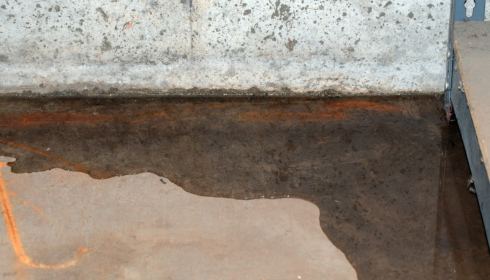
Hidden moisture rarely announces itself with a clear origin. A damp basement can appear after storms, during dry weather, or without any obvious trigger at all. Identifying the true source requires methodical observation, testing, and experience rather than guesswork.
Checking Wall Stains to Trace Water Entry Paths
Wall discoloration provides one of the earliest clues contractors evaluate. Water rarely travels in straight lines once it enters a basement, so stains often appear several feet away from the actual entry point. Professionals study the stain shape, color, and height to determine whether moisture is seeping laterally through masonry or descending from higher wall sections. Older stains are just as important as fresh ones. A faded water line may reveal a long-term issue that only activates during certain weather conditions. By mapping these marks across multiple walls, contractors begin forming a pattern that narrows down likely intrusion zones before invasive testing begins.
Inspecting Floor Cracks for Active Seepage Points
Basement floors experience pressure from groundwater pushing upward beneath the slab. Small cracks that look harmless can become entry points once hydrostatic pressure builds. Contractors inspect these cracks closely, looking for mineral residue, damp edges, or subtle darkening that signals water movement.
Fresh seepage often leaves behind fine sediment or creates a slightly cooler surface temperature. These details help distinguish between surface condensation and water entering from below. This step is critical before recommending basement leak repair near me services, since floor leaks require a different solution than wall intrusion.
Testing Window Wells During Simulated Rainfall
Basement window wells are common failure points, especially in older homes or properties with poor drainage. Contractors often simulate rainfall by introducing controlled water flow into the well while monitoring interior surfaces. This process reveals whether water is bypassing the window seal or accumulating faster than the drain can handle. The timing of water appearance matters. Immediate leakage points to seal failure, while delayed moisture suggests soil saturation issues. Simulated testing prevents misdiagnosis and helps avoid unnecessary interior repairs that fail to address the real cause.
Reviewing Exterior Grading near Foundation Walls
Water follows gravity long before it reaches the basement. Contractors assess how soil slopes around the foundation to determine whether surface runoff is being directed toward the structure. Even slight grading issues can funnel large volumes of water against foundation walls during storms. Soil compaction and landscaping changes are also considered. Over time, settled soil can reverse proper drainage without homeowners noticing. This evaluation explains why some basements leak only after heavy rain and remain dry otherwise.
Examining Sump Activity During Heavy Rain Events
A sump system offers valuable insight into subsurface water behavior. Contractors monitor how frequently the pump activates during rainfall and how quickly water refills the pit. Abnormal cycling patterns may indicate excessive groundwater pressure or a failing discharge system. Sudden spikes in sump activity often correlate with foundation seepage elsewhere. Understanding this relationship helps contractors connect interior symptoms to exterior water conditions, ensuring basement leak repair near me efforts address the underlying issue rather than surface damage alone.
Tracing Moisture Lines Behind Finished Wall Panels
Finished basements can hide leaks for months or even years. Contractors use moisture meters and thermal imaging to locate damp areas behind drywall or paneling. These tools reveal vertical moisture trails that point back to specific wall sections. Removing small access sections allows confirmation without widespread demolition. This targeted approach prevents unnecessary disruption while ensuring hidden leaks are identified before structural materials deteriorate further.
Inspecting Pipe Joints for Pressure-related Leaks
Not all basement water comes from outside the home. Plumbing lines running through foundation walls can leak under pressure, mimicking groundwater intrusion. Contractors inspect pipe joints, shutoff valves, and penetrations for corrosion or mineral buildup.
Pressure testing may be used to determine whether leaks occur only when fixtures are in use. This step eliminates false assumptions and ensures repair plans focus on structural waterproofing only when plumbing issues are ruled out.
Monitoring Humidity Spikes After Storms
Air moisture patterns provide indirect but valuable data. Contractors track humidity levels in the basement before and after rainfall to detect sudden increases. A rapid spike often signals water intrusion even if visible pooling has not occurred.
Consistent monitoring helps differentiate between condensation problems and active leaks. This distinction prevents unnecessary waterproofing work when ventilation or insulation adjustments are the true solution.
Using Dye Tests to Confirm Exact Entry Locations
Dye testing offers precise confirmation once likely entry points are identified. Contractors introduce non-staining dye into suspected exterior areas while observing interior surfaces. The appearance of color inside confirms the exact pathway water is using.
This method removes uncertainty and ensures repairs target the correct location. Accurate confirmation saves time, reduces costs, and prevents repeated water intrusion after repairs are completed. Accurately identifying basement leaks requires layered inspection rather than assumptions. Kennedy and Sons can evaluate moisture patterns, structural conditions, and drainage behavior to determine where water enters and recommend repair options that address the source, not just the symptoms.