
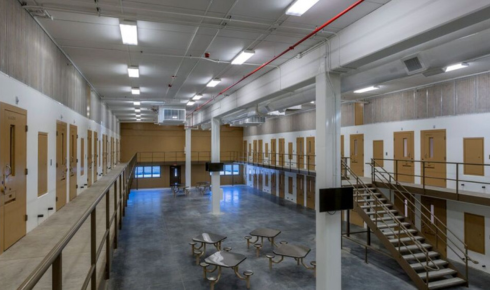
Space, time, and funding pressures often collide in detention planning. Population changes rarely follow construction schedules, leaving administrators searching for options that respond faster than traditional builds. Modular jails answer that need by offering controlled, scalable housing solutions that adapt to real-world demands without long project delays.
County Detention Centers Facing Rapid Inmate Intake Changes
County detention centers often experience unpredictable intake driven by policy shifts, court backlogs, or regional enforcement changes. Modular jails allow counties to respond without waiting years for permanent expansions. Units can be added in phases, letting administrators align capacity with actual intake rather than forecasts.
Another advantage is operational continuity. Construction around active detention areas can disrupt daily routines and security protocols. Modular solutions reduce on-site build time, helping county teams maintain safety while expanding housing capacity efficiently through trusted Cornerstone detention equipment contractors.
City Holding Facilities Needing Fast Capacity Expansion
City holding facilities face constant pressure from short-term detainee surges. Events, public safety initiatives, or seasonal population changes can overwhelm existing space. Modular jails provide cities with fast deployment options that support temporary or long-term use.
Speed matters in urban environments where space is limited. Modular units arrive largely complete, minimizing disruption near police stations or municipal buildings. Cornerstone security detention equipment contractor experience helps ensure these installations meet security standards without slowing city operations.
Rural Jails with Limited Construction Budgets
Rural jurisdictions often operate under tighter budgets and limited access to large construction firms. Modular jails offer a cost-controlled alternative that reduces design, labor, and material expenses. Phased installation also spreads costs over time.
Budget predictability is a major benefit. Standardized components and reduced on-site labor lower unexpected expenses. Many rural systems rely on Cornerstone prison supply manufacturers to deliver durable, compliant solutions that fit smaller operational footprints.
Federal Detention Sites Requiring Standardized Housing Units
Federal detention sites prioritize uniformity, compliance, and repeatable designs. Modular jails align well with these requirements by offering standardized housing units that meet established specifications. This consistency simplifies planning and long-term maintenance.
Standardization also improves training and operations. Staff move between units with minimal adjustment, reducing errors. Modular construction supports federal scalability while maintaining consistent security levels across multiple sites.
Temporary Holding Centers During Facility Renovations
Renovation projects often require relocating detainees while work is underway. Modular jails serve as temporary holding centers that keep operations running without transferring populations far from their original location. These temporary units maintain necessary security features while allowing permanent structures to undergo repairs or upgrades. Once renovations finish, modular units can be relocated or repurposed, extending their value beyond a single project.
Border Processing Facilities Managing Fluctuating Populations
Border processing environments experience sharp intake fluctuations tied to migration patterns and enforcement actions. Modular jails offer flexibility that permanent structures cannot. Capacity expands or contracts as conditions change.
Durability is essential in these high-use settings. Modular systems withstand frequent turnover while maintaining secure conditions. Coordination with Cornerstone detention equipment contractors ensures installations meet demanding operational and safety expectations.
Juvenile Detention Centers Needing Flexible Space Layouts
Juvenile detention centers require adaptable layouts that support education, counseling, and separation needs. Modular jails allow administrators to configure spaces for age groups, program areas, or behavioral classifications.
Flexibility improves care and compliance. Units can be reconfigured as program needs evolve without rebuilding entire wings. Modular approaches support environments that balance security with rehabilitative goals.
Court-adjacent Lockups with Space Constraints
Courthouses often lack room for traditional detention construction. Modular jails provide compact, efficient solutions that fit within tight footprints near courtrooms. These lockups support short-term holding without requiring major structural changes. Reduced build time limits courthouse disruption. Modular units integrate security systems and furnishings efficiently, supporting daily court operations. Their adaptability makes them ideal for urban judicial settings.
Emergency Overflow Facilities During Natural Disasters
Natural disasters can displace populations or damage detention infrastructure. Modular jails act as emergency overflow facilities that restore capacity quickly. Deployment speed becomes critical when safety and continuity are at risk.
These units offer controlled environments during recovery periods. Once emergencies pass, modular components can be stored or reassigned. This reuse potential adds long-term value to disaster preparedness planning.
Modular jail solutions serve a wide range of operational needs, from rapid expansion to temporary housing and long-term flexibility. Cornerstone provides engineered detention equipment, modular solutions, and installation expertise that help facilities adapt safely, efficiently, and responsibly as demands change.