
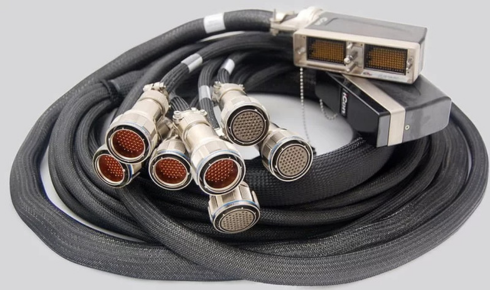
India’s defence sector is undergoing a major transformation as part of a long-term modernisation strategy aimed at building self-reliance, efficiency, and advanced capabilities across its forces. From ground-based command networks to airborne communication and naval operations, reliable and secure connectivity forms the backbone of defence coordination. One crucial component driving this advancement is the use of multipin military connectors, which ensure uninterrupted and secure transmission of data and power across critical defence systems.
Strengthening the defence communication infrastructure
Modern defence communication systems depend on speed, accuracy, and resilience. As the military adopts more complex digital networks and automated control systems, the quality of electrical and signal connections becomes increasingly important. A weak or inconsistent connection can disrupt the exchange of mission-critical data, which in turn could impact operational efficiency.
Multipin military connectors are designed to handle such challenges. With their ability to transmit both power and signals through multiple contact points in a single housing, these connectors streamline the architecture of military communication systems. They make it possible to reduce the number of interfaces and cables needed, which improves both performance and reliability.
These connectors are used extensively in field communication units, radar systems, vehicles, drones, and aircraft, where compactness, durability, and high performance are non-negotiable.
The role of MIL DTL 5015 connectors
Among the different types of multipin connectors used in defence applications, MIL DTL 5015 connectors are among the most trusted and widely deployed. Developed according to strict military standards, these connectors are known for their robustness and versatility. They can operate effectively in extreme conditions such as high temperature, dust, humidity, and vibration.
Mil DTL 5015 connectors are frequently found in communication consoles, tactical control systems, and mobile command units. Their circular design and secure coupling mechanisms allow them to resist disconnection under stress, ensuring continuous signal and power transfer. The standardised design also makes them compatible with a wide range of military and industrial systems, simplifying integration across different platforms.
Ruggedized connectors for harsh defence environments
Defence operations often take place in unpredictable and harsh environments, from deserts and high altitudes to deep-sea and tropical regions. Electrical systems in these areas face mechanical shocks, dust, saltwater, and electromagnetic interference. Ruggedized connectors are specifically engineered to endure such environments without performance degradation.
They feature corrosion-resistant materials, sealed housings, and vibration-proof coupling mechanisms. These properties make them ideal for use in mobile communication units, armoured vehicles, and advanced weapon systems. Their reliability helps maintain secure communication even during long missions and under adverse conditions.
By combining the toughness of ruggedized connectors with the precision of mil DTL 5015 connectors, India’s defence communication networks can achieve greater resilience and operational efficiency.
The role of Indian manufacturers in defence upgrades
As India accelerates its efforts under the “Make in India” and “Aatmanirbhar Bharat” initiatives, domestic production of high-performance defence components has become a strategic priority. Connectors manufacturers in India are now developing solutions that meet international defence standards while offering localisation benefits such as shorter supply chains and customised configurations.
Leading companies such as Allied Connectors have played a key role in advancing this sector. Their expertise in multipin military connectors, mil DTL 5015 connectors, and ruggedized connectors has supported both domestic projects and export requirements. These companies combine global engineering standards with local manufacturing capabilities, helping to strengthen India’s position as a dependable supplier in the global defence ecosystem.
Enabling the future of secure defence communication
As the nature of warfare and defence coordination evolves, communication systems must keep pace. The growing use of drones, autonomous vehicles, and integrated command networks demands electrical connectors that deliver uninterrupted and interference-free performance. Multipin military connectors provide the foundation for this connectivity by ensuring secure data transmission, stable power delivery, and long-term durability.
With support from forward-thinking connectors manufacturers in India like Allied Connectors, the country is well-positioned to build the next generation of defence systems that meet global standards for strength, safety, and performance.